

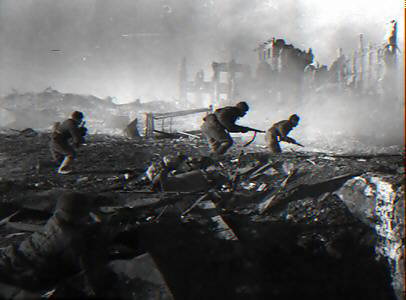
The Battle of Stalingrad is one of the many major battles in World War II in which Germany and their allies fought the Soviet Union. This battle began because the Germans wanted control of the city of Stalingrad because it stood in their way to controlling the Caucasus oil fields. The fighting took place July 17, 1942- February 2, 1943 and has been declared as one of the turning points in the war. This battle has been cited as the bloodiest battle in the history of warfare. Throughout the battle more than one million men were wounded, died and/or were captured on both of the German and Russian sides.
This battle for the city of Stalingrad resulted in Germany’s defeat in the World War II. How did the Red Army defeat the Germans? Early in the campaign, Germany focused on attacking Leningrad and Moscow, but that had failed. So Hitler decided to invade southern Russia (where Stalingrad was located). The 6th Army took over nearly 90% of the city, leaving a small fighting group of Russians defending the West back of the Volga River. When Soviet reinforcements arrived, they were successful at surrounding the Germans within the city. The Battle of Stalingrad, however, did not only destroy Germany’s army, but also ended their offensive in Russia. This surrender ends five months of heavy battling for the city.
The Battle of Stalingrad was very important to Hitler for two important reasons. First, it was a major industrial city on the Volga River. The Germans wanted to control of the transport resources and goods to the north. Second, capturing the city would effectively cut off fuel from the Caucasus oil fields to Stalin and his Red Army. The more Hitler thought about Stalingrad, the more determined he was to invade the city. In the end, although this battle was not Germany’s first set back, it was one of the most significant.
There were two major contributors to the defeat of Hitler’s 6th Army by the Soviets. First, the Red Army’s devotion to defending their city and its surrounding area was unmatched by any of Axis powers. They knew in advance that Germany was planning to attack the city. In preparation and strategic planning Soviets shipped most of the city’s grain and food out of town and out of harm’s way, leading to the starvation and weakness of the German forces. This combined with severe weather conditions, frostbite, and disease resulted in many German deaths outside of the battlefield. Hitler tried to fight on too many fronts and the Soviets were trained to deal with the often difficult weather. Eventually, the Red Army was successful in stopping the invasion of the Germans.
The Battle of Stalingrad stopped Germany’s progression across Russia. Many people died in this battle and it was one of the bloodiest battles in modern history. Different sources report approximately 850,000 Germans were killed and/or captured, close to 1 million Soviet deaths, and over 40,000 civilian deaths. Many people sacrificed their lives in this battle. Historians have pronounced this as one of the most decisive battles fought in World War II.
Word Count 522

Subscribe to:
Post Comments (Atom)




Mckenna, I don't know what argument you're trying to bring up. It seems that you're only bringing up facts. Don't forget what Mr.Swenson said "don't put the word count."
ReplyDeleteI had no idea what Stalingrad was until now. I enjoyed reading your article. Did the Germans do anything different in their battle tactics that cost them their defeat? How come all of a sudden the Germans started losing these battles?
ReplyDeleteLogan, I believe that the Soldiers of the Red Army had more of a drive to win because they were defending their home territory.
ReplyDelete