
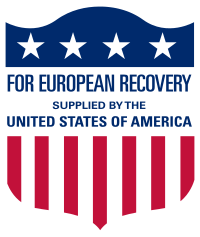
In June 1947, the Secretary of State delivered the beginning address at Harvard University. George Catlett Marshall had been named to the important position for his indispensable role in World War II, his influence, and his outstanding reputation with congress and the American people. Throughout World War II Marshall was U.S army chief of staff. He built and directed one of the largest armies in history. He became Secretary of State in 1947 and later served as Secretary of Defense. For his efforts in helping Europe, Marshall was later awarded 1953 Nobel Peace Prize. He was the first professional soldier to receive it. The plan he proposed in his speech later became known as the Marshall Plan.
The Economic Recovery Program (ERP), also known as “The Marshall Plan”, was created to be a solution to the wide-spread hunger, unemployment, and housing shortages in Europe during the aftermath of World War II. Though Marshall was given credit for the plan, it was formally created by state department officials. Its main focus was to present a plan to help the economic recovery of European nations shock by World War II. This plan mainly looked forward to the future, and did not focus on the outcome of World War II.
At this time after World War II, Europe was in bad circumstances. Raw materials and food were in short supply. War damaged industries needed machinery and production help to recreate a new economy. Under the control of the United States, the Marshall Plan was important to prevent the spread of communism in Western Europe and to stabilize the international order in a way so that democracy and the free-market economies were retained.
The reaction of the Europeans to this plan was positive and quick. The British and the French foreign ministers invited twenty-two European countries to send representatives to Paris to write up a recovery plan. Sixteen of the countries accepted this offer, only the Soviet Union and countries that were under their power declined. Czechoslovakia and Poland wanted to attend, but Stalin used his power to stop them. Spain was not invited and Finland declined. “This plan was the boldest, most successful, and certainly the most expensive foreign initiative ever attempted in peacetime.” This idea gave Western European nations time to recover and maintain their economic and political independence.
This plan was in use for four years and in these four years congress appropriated $13.3 billion for Europe’s recovery. The Western Europeans and the United States both benefitted from this plan. Most of the recovering nations bought goods and services from the U.S. They developed into trading partners and formed individual and collective friendships between the two. The Marshall Plan was a very successful plan and helped Europe develop into what they have become of today. The Marshall Plan also established international cooperation and fostered the creation of other organizations, such as the Organization for Economic Cooperation and Development (OECD), the North Atlantic Treaty Organization (NATO), and the current European Union (EU).
The Marshall Plan was scheduled to end in 1953. Growing commitment to the Korean War prevented any continuation of the plan. By then the European countries were steadily growing in production of goods and food supplies. Starvation, a result of the WWII, disappeared and economies grew at a very fast rate. Citizens of these Western European countries were well fed and content with their societies. This made the countries more stable and there were less political arguments.
Word Count 577

Subscribe to:
Post Comments (Atom)




No comments:
Post a Comment